Day01 Go 环境与基础
首先准备环境。(之前为了搞些小工具,多多少少接触一点go,不过几乎可以说为0) 那么最重要的:官网,哪里的文档都不如亲妈的描述
打开网站反正左右都是个download
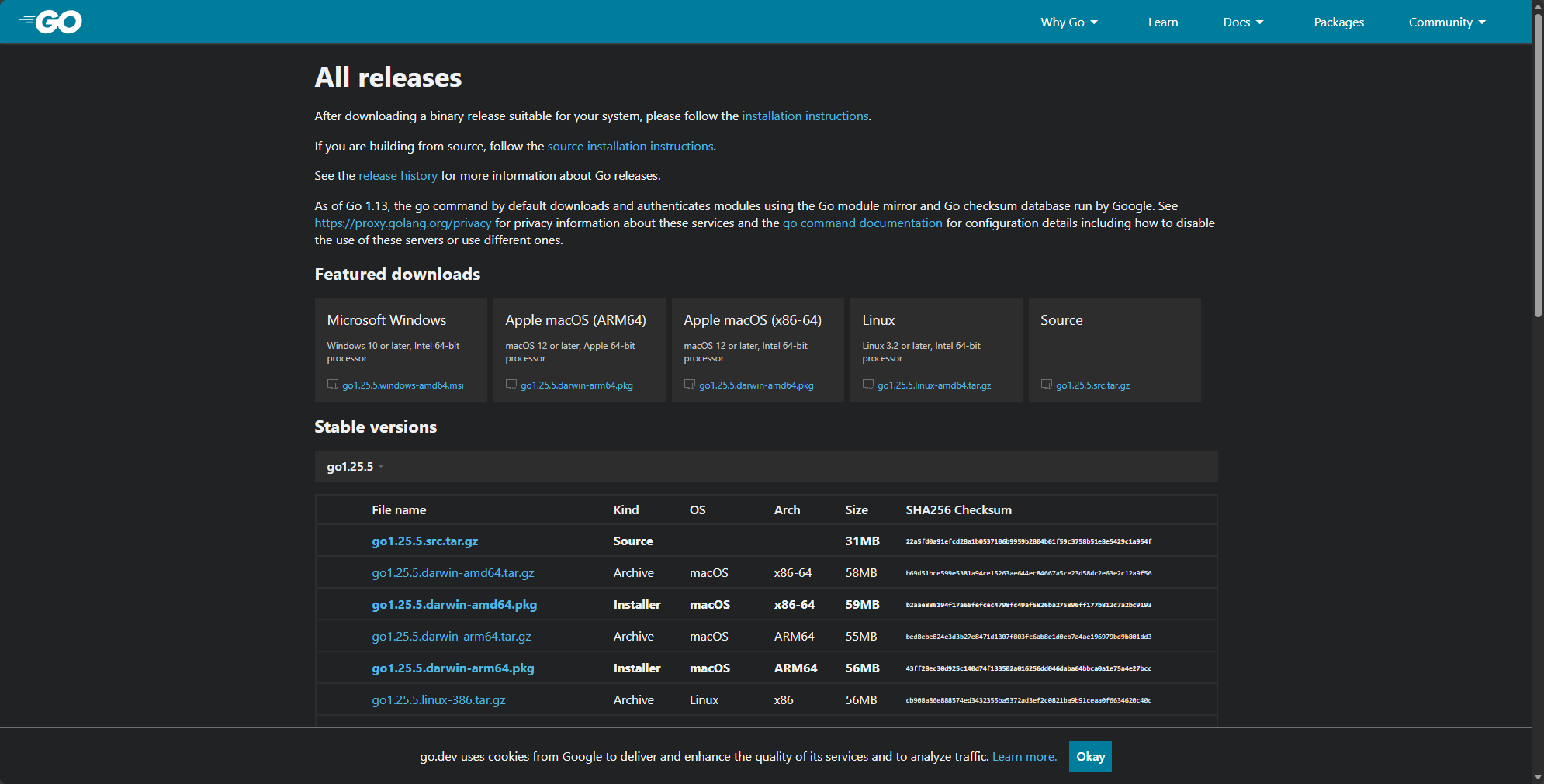
找个适合的下载吧(感觉这个都能单开一篇来写,这里没写是因为之前已经装过了) 完成之后terminal里可以看到版本号
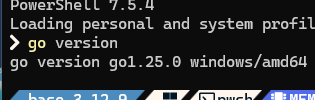
Note
如果暂时不装环境。官方有一个 A Tour of Go,可以直接在这里学最基础的一些语法 A Tour of Go
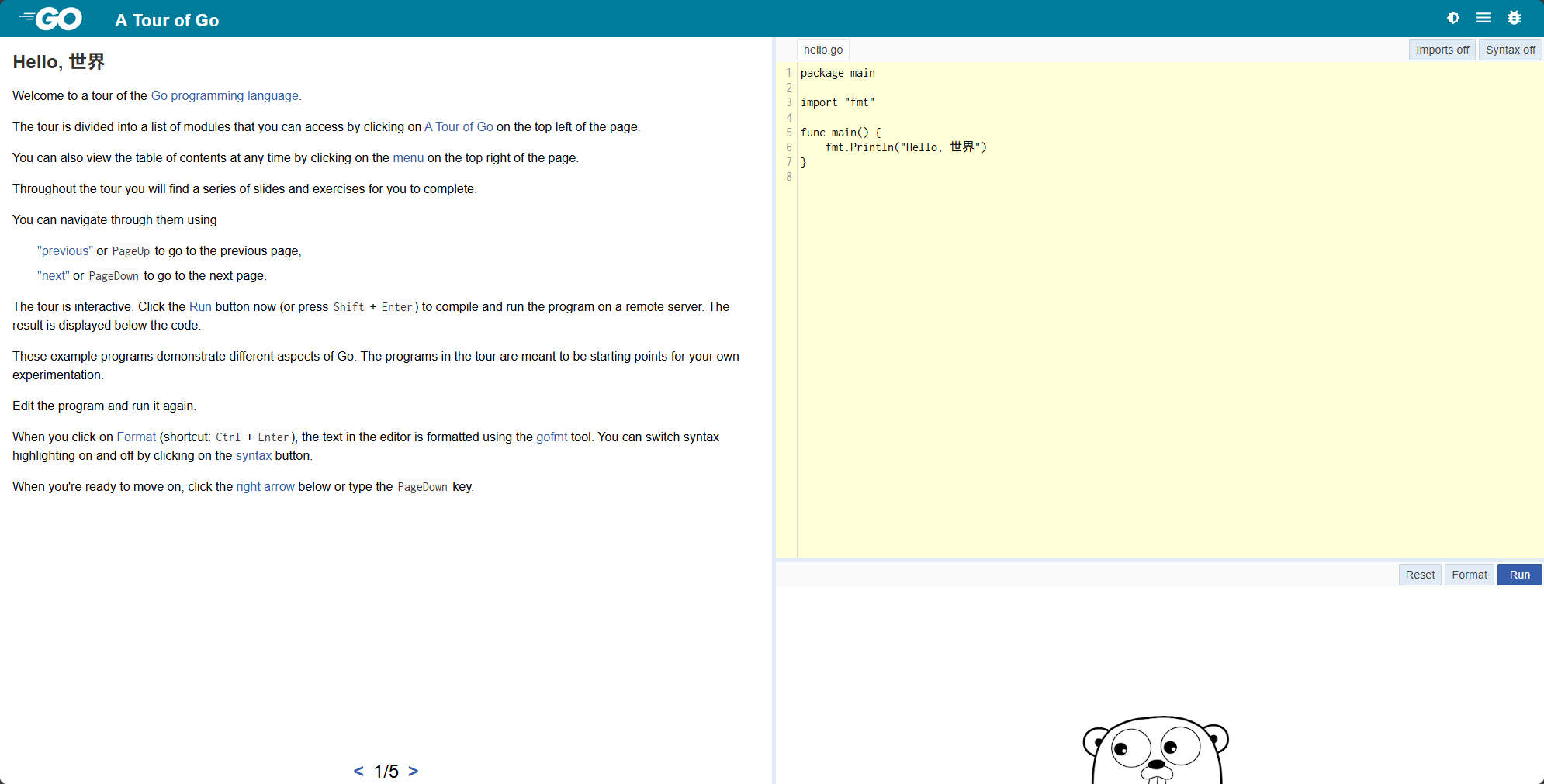
这里有个很有意思的事情,可以看到他的那句 打印居然是 Hello,世界,而不是咱们熟知的hello world,我还特意检查了一下是不是我的翻译插件又出bug了
那么grok小助手帮我搜一下吧(最近弄了个小号池)
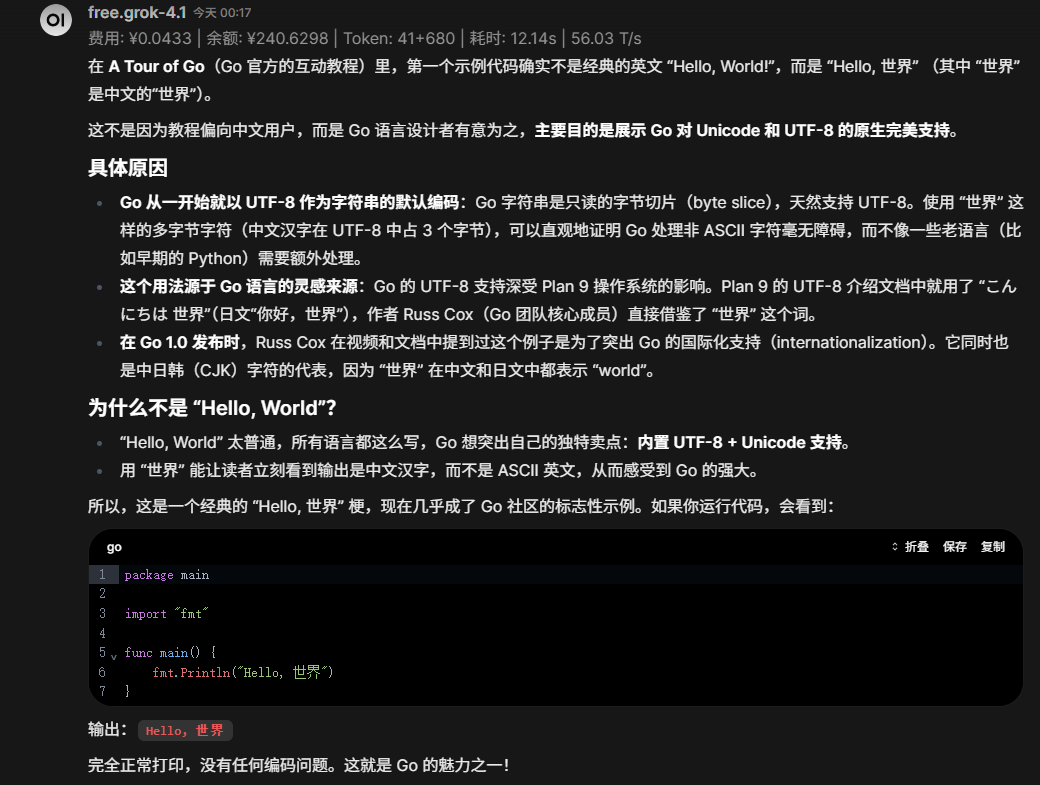
主要是为了展示 Go对Unicode和UTF-8的完美支持
这里的指南总计需要半个小时左右即可阅读完毕,建议可以先读一遍。同时,我在读了一半的中文版后强烈建议有能力的一定要读英文版,当然,我读起来还是一卡一卡的啦(和今晚的网络质量一样😡)
Packages
Every Go program is made up of packages.
Programs start running in package main.
This program is using the packages with import paths “fmt” and “math/rand”.
By convention, the package name is the same as the last element of the import path. For instance, the “math/rand” package comprises files that begin with the statement package rand.
package main: 告诉 Go 编译器,这个文件是一个可执行程序的入口,而不是一个库(Library)。func main(): 这是程序启动时第一个执行的函数。入口函数import "fmt": 导入格式化包,这样你才能使用Println打印内容。
| |
This code groups the imports into a parenthesized, “factored” import statement.
You can also write multiple import statements, like:
| |
But it is good style to use the factored import statement.
Exported names(可见性)
In Go, a name is exported if it begins with a capital letter. For example,
Pizzais an exported name, as isPi, which is exported from themathpackage.
pizzaandpido not start with a capital letter, so they are not exported.When importing a package, you can refer only to its exported names. Any “unexported” names are not accessible from outside the package.
Run the code. Notice the error message.
To fix the error, rename
math.pitomath.Piand try it again.
| |
Go 语言中,没有像 Java 或 C++ 那样的 public、private 关键字。Go 直接通过首字母来区分
首字母的大小写决定了该变量、函数或类型能否被“外人”看到。
这里给到的示例代码运行会报错
./prog.go:9:19: undefined: math.pi (but have Pi)
Tip
- 大写字母开头 (Exported):它是“导出的”,意思是可以被外部包访问(相当于
public)。 - 小写字母开头 (Unexported):它是“未导出的”,意思是只能在自己包内部使用(相当于
private)。
改成Pi之后输出就是
3.141592653589793
这个设计是go的极简思想(说实话,感觉很有python的宗旨,比python还python)
函数
A function can take zero or more arguments.
In this example,
addtakes two parameters of typeint.Notice that the type comes after the variable name.
(For more about why types look the way they do, see the article on Go’s declaration syntax.)
| |
说实话这个看起来很费劲,当然,对于等下的变量来说,更费劲的还没来
Functions continued
When two or more consecutive named function parameters share a type, you can omit the type from all but the last.
x, y int
ok熟悉,这不是 C/C++ 的 int x, y;
可是,这里是函数里啊,真的相当极简了
好在我适应性强呢 [/狗头]
Multiple results
A function can return any number of results.
The
swapfunction returns two strings.
| |
Named return values
Go’s return values may be named. If so, they are treated as variables defined at the top of the function.
These names should be used to document the meaning of the return values.
A
returnstatement without arguments returns the named return values. This is known as a “naked” return.Naked return statements should be used only in short functions, as with the example shown here. They can harm readability in longer functions.
| |
WTF,说实话,震惊来着的。有啥用,只能说,短函数真的能偷懒就偷懒了。这里既在函数开始的时候就定义了x y 变量。还在return的时候啥都没带,这就是Naked return~,他会返回x和y。当然,官方也说了,长函数别这样玩
变量声明和初始化
The
varstatement declares a list of variables; as in function argument lists, the type is last.A
varstatement can be at package or function level. We see both in this example.
var c, python, java bool
Variables with initializers
A var declaration can include initializers, one per variable.
If an initializer is present, the type can be omitted; the variable will take the type of the initializer.
| |
output
1 2 true false no!
Short variable declarations
Inside a function, the
:=short assignment statement can be used in place of avardeclaration with implicit type.Outside a function, every statement begins with a keyword (
var,func, and so on) and so the:=construct is not available.
| |
可以,这个喜欢
基本类型
Go’s basic types are
bool
string
int int8 int16 int32 int64 uint uint8 uint16 uint32 uint64 uintptr
byte // alias for uint8
rune // alias for int32 // represents a Unicode code point
float32 float64
complex64 complex128
The example shows variables of several types, and also that variable declarations may be “factored” into blocks, as with import statements.
The
int,uint, anduintptrtypes are usually 32 bits wide on 32-bit systems and 64 bits wide on 64-bit systems. When you need an integer value you should useintunless you have a specific reason to use a sized or unsigned integer type.
后面的数字代表占多少位(bit),默认int长度取决于系统
uintptr 这是一个特殊类型,大到足以存储指针的位模式,底层开发时用。
uint 只能表示 0 和正数。常用于处理二进制数据、内存地址等。这个类型写C单片机常构造
默认用
int:除非有非常明确的理由(比如:这个数一定很大,超过了 20 亿,需要用int64;或者你在处理二进制字节流,需要用byte),否则一律声明为int。没有隐式转换:
- 在 Python 中,可以用
1 + 1.5。 - 在 Go 中,
int和int32是两种完全不同的类型。不能直接把它们相加,必须手动转换:int64(myInt32) + myInt64。
- 在 Python 中,可以用
零值 (Zero Value):在 Go 中,声明一个变量但不给它赋值,它不会是
undefined或None。- 数字类型默认是
0。 - 布尔类型默认是
false。 - 字符串类型默认是
""(空字符串)。
- 数字类型默认是
[go] 显示已折叠代码(18 行)
| |
| |
这里我有个疑问,没有None之类的吗?
那么go里面 用的是 nil ,啊哈,我在Lua那里认识你
由于int、bool、string等都有初始值,也就是 0 和false 以及 “",nil不能赋值给他们
下一页就讲了这个咯
zero value
Type conversions
The expression
T(v)converts the valuevto the typeT.Some numeric conversions:
var i int = 42 var f float64 = float64(i) var u uint = uint(f)
Or, put more simply:
i := 42 f := float64(i) u := uint(f)
Unlike in C, in Go assignment between items of different type requires an explicit conversion. Try removing the
float64oruintconversions in the example and see what happens.
T(v) 把变量 v 转换为类型 T
| |
output 3 4 5
浮点数转整数:
当使用 int(f) 转换浮点数时,Go 会直接截断小数部分(也就是向 0 取整),而不是四舍五入。
int(3.9)结果是3int(-3.9)结果是-3
Type inference
When declaring a variable without specifying an explicit type (either by using the
:=syntax orvar =expression syntax), the variable’s type is inferred from the value on the right hand side.When the right hand side of the declaration is typed, the new variable is of that same type:
var i int j := i // j is an int
But when the right hand side contains an untyped numeric constant, the new variable may be an
int,float64, orcomplex128depending on the precision of the constant:i := 42 // int f := 3.142 // float64 g := 0.867 + 0.5i // complex128
我试了一下 字符串可以,gemini提醒我,单引号包裹字符是 int32,也就是rune类型
数字常量在 Go 里面有 “默认类型” 的概念,这很容易让初学者困惑:
- 整数:如果你写
i := 42,即使42还没超过int8的范围,Go 也会统一推断为int(在 64 位系统上就是int64)。它不会自作聪明帮你选个小的类型。- 浮点数:如果你写
f := 3.14,Go 永远会推断为float64,而不是float32。因为在现代计算机中,float64是精度和性能最平衡的选择。
| |
Go 的类型推断遵循 “所见即所得”:
- 右边是什么类型,左边就是什么类型。
- 如果是没有明确类型的数字常量,则按“大类”走(整数给
int,小数给float64)。
常量
Constants are declared like variables, but with the
constkeyword.Constants can be character, string, boolean, or numeric values.
Constants cannot be declared using the
:=syntax.
Numeric Constants
Numeric constants are high-precision values. An untyped constant takes the type needed by its context. Try printing
needInt(Big)too. (Anintcan store at maximum a 64-bit integer, and sometimes less.)
[go] 显示已折叠代码(24 行)
| |
常量是“理想数字”,编译时判断一次,如果变量参与那就可能编译判断可能运行判断
结束
至此第一天结束,但是我没有按照G老师的课程,内心愧疚。明天继续